Walk right into any workplace in Maitland and you'll see a first aid package on the wall surface, perhaps an AED put near function, and a couple of staff with name badges that point out safety. These are reassuring views. What conserves lives, however, is less visible: calmness, practiced hands beginning mouth-to-mouth resuscitation within secs, a person sending for the defibrillator, a voice on speaker with Triple Absolutely no leading the scene. Excellent intentions help, however proper method and confidence originate from purposeful technique and correct info. That's where top quality Maitland first aid training makes the difference.
I have actually educated CPR to childcare teachers that spend their days with young children, to tradies who operate at height, to health and fitness trains who press their customers hard, and to retirees that take care of grandkids. The inquiries I listen to correspond. What if I break a rib? How tough should I press? Does rescue breathing still matter? Am I covered legitimately if something fails? The solutions are plain, and a little technique secures them in. Let's sort the myths from the facts and set out best practices, shaped by real-world lessons I have actually seen throughout emergency treatment and mouth-to-mouth resuscitation training courses in Maitland.
Why speed and simplicity matter
Cardiac apprehension is a plainspoken adversary. The heart quits pumping efficiently, the person stops breathing normally, and mind cells start to pass away within mins. Every minute without mouth-to-mouth resuscitation and defibrillation drops the opportunity of survival by about 7 to 10 percent. That seems blunt, due to the fact that it is. The other side issues equally as much: early breast compressions incorporated with rapid AED use can triple survival in some settings.
I bear in mind a rugby coach from East Maitland who finished a cpr correspondence course Maitland on a Thursday and utilized those skills the following Tuesday evening on a spectator who collapsed. He really did not wait on excellence. He started compressions, sent a player for the AED, and placed the phone on audio speaker. When paramedics showed up, blood circulation had returned. That outcome wasn't luck. It was very early action.
If there's a single regulation that strings via emergency treatment and mouth-to-mouth resuscitation Maitland courses, it's this: do the straightforward points quick and well.
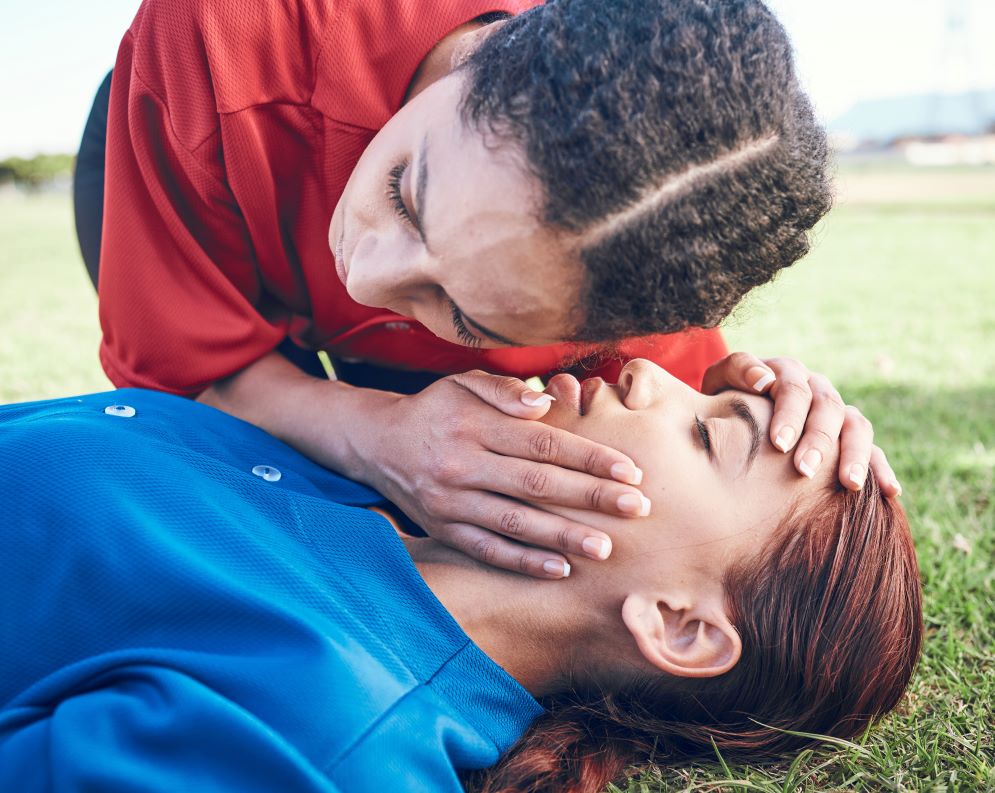

Myth: You need to be fully accredited to start CPR
The anxiety behind this is understandable, however it reduces people down. Under Australian Good Samaritan securities, onlookers who act in good confidence to offer emergency assistance are protected from obligation. You do not need an emergency treatment certificate Maitland to start compressions. If you see an unresponsive person that isn't taking a breath generally, call 000, placed the phone on audio speaker, and start pressing hard and fast in the centre of the chest.
Training assists, a whole lot. A Maitland emergency treatment training course provides you muscle memory, timing, and a psychological design of what to anticipate. That stated, no one ought to stand back and await a qualified person if seconds are ticking away. Dispatchers can train you through rate and deepness. If an AED neighbors, it will literally talk you via pad positioning and shocks.
Myth: CPR constantly brings people back like on TV
Real results are much more serious. Mouth-to-mouth resuscitation does not reboot a heart in the Hollywood sense. It supplies a portion of normal blood flow to the brain and heart, acquiring time up until a shock from an AED or innovative care can restore a practical rhythm. Also top quality CPR is literally demanding and often untidy. Ribs can break. Breathing might be agonal. None of this indicates you're doing it wrong.
Survival differs by context. Out-of-hospital cardiac arrest survival in Australia varies extensively, usually in the 10 to 30 percent bracket depending on place, cause, and response time. Where neighborhoods are filled with AEDs and where onlookers begin compressions quickly, numbers are much better. That's a strong debate for even more cpr training Maitland and even more AED ease of access at clubs, fitness centers, and workplaces.
Myth: You'll get filed a claim against if something goes wrong
This worry stops great people at the worst moment. NSW Do-gooder regulations are extremely clear: if you act in good confidence, without foolhardiness, you are shielded. The assumption is not perfection, it's sensible care. Start compressions if the individual isn't taking a breath typically, comply with the AED prompts, and hand over to paramedics when they arrive. File what took place afterward if it's an office incident, but do not delay treatment out of fear.
From a functional perspective, every emergency treatment course in Maitland need to cover the legal fundamentals and case coverage. I urge workplaces to maintain a basic debrief layout: that, what, where, time, activities taken, witnesses, and equipment made use of. It maintains the story straight and aids groups learn.
Fact: Deepness, price, and recoil are the foundation
When I enjoy students in a cpr training course Maitland move from the class to the manikin, the very first pass is nearly constantly also shallow. We're constructed to be reluctant. The standards do not. Adults need compressions concerning one third of the breast depth, which exercises to about 5 to 6 centimetres, at a price of 100 to 120 per minute. Let the upper body completely recoil in between compressions so the heart refills.
Set a rhythm. The classic tracks at 100 to 120 beats per min still work. I'm much less worried with which track individuals keep in mind and much more focused on uniformity. If your arms are bending, you're utilizing your biceps and will certainly stress out. Stack your shoulders over locked arm joints, utilize your body weight, and get as near upright as the environment allows.
Fact: Hands-only CPR works for the majority of adult unexpected collapses
Compression-only mouth-to-mouth resuscitation functions well in grown-up cardiac arrests that begin as a main heart problem. Flowing oxygen that's already in the blood can maintain the brain active long enough for defibrillation. Where breaths matter a lot more is when the reason is hypoxic from the start: drownings, medication overdoses, children and infants, or long term downtime.
In actual occurrences throughout Maitland emergency treatment training, I have actually seen individuals panic over mouth-to-mouth reluctance. If that's an obstacle, do hands-only and send out for the AED. If you're trained and willing, incorporate compressions with breaths at a 30 to 2 proportion for adults, pausing briefly to seal the airway and supply reliable rises of the upper body. If you're alone with a kid or baby and suspect hypoxia, begin with five initial rescue breaths prior to compressions, as you'll learn in a first aid and cpr program Maitland.
Fact: AEDs are secure, straightforward, and ruthless of delays
Automated external defibrillators do not shock indiscriminately. They evaluate rhythm and just suggest a shock when a shockable rhythm exists. I have actually enjoyed individuals float, scared to use pads since they might do harm. That reluctance sheds the minute that determines outcomes.
Open the situation, transform the device on, and adhere to the voice triggers. Location one pad on the top right upper body, the other on the lower left side under the armpit, avoiding medicine patches and dental implanted tools. If the breast is damp, dry it quickly. If it's hirsute and the pads will not stick, make use of the razor in the package to clear a patch the size of the pad. Maintain compressions going until the tool informs you to stand clear. Then get straight back on the chest.
What excellent training looks like
A solid Maitland first aid training course blends clear concept with heavy practice time. You ought to leave feeling literally tired from compressions and https://arthurodvc300.wpsuo.com/mouth-to-mouth-resuscitation-correspondence-course-maitland-keep-your-expertise-sharp emotionally lighter because the steps make sense. Practical circumstances matter: tiny houses with coffee tables in the means, a swimming pool deck took in water, a confined ute cab after a minor car accident. Life does not offer you a spacious class and ideal lighting.
When I provide first aid training courses Maitland large, I push for:
- Scenario diversity that mirrors local risks: sporting activity clubs, country buildings, flood-prone areas, and commercial sites. Repetition under light stress and anxiety: timed drills, partner swaps, and role-played onlooker chaos. Feedback tools on manikins: they evaluate depth, rate, and recoil so you can fix in actual time. AED exercise with various designs: not every gadget has the exact same format or prompts. Discussion of usual judgment calls: when to stop, when to relocate the person, and just how to take care of family members on scene.
That list is not about ticking boxes. It has to do with encoding routines to make sure that when the adrenaline strikes, you fall back on what you have actually done lots of times.
Maitland-specific realities: setting and community
Every area has quirks that form emergency treatment. Around Maitland, summer season warmth and outside sporting activity drive dehydration and exertional collapse. The Seeker River and yard pools maintain drowning avoidance front of mind. Agricultural job presents crush injuries, entanglements, and chemical direct exposures. Include expanding populaces at health clubs and community events, and you have plenty of congregations where mouth-to-mouth resuscitation may be needed before a rescue can arrive.
This is where the material of first aid and mouth-to-mouth resuscitation courses Maitland interweaves with neighborhood planning. Sports clubs can map their AED location and make it public. Shopping centres can position devices plainly and educate security teams. Child care centres can make sure every teacher preserves present certification, rather than depending on a couple of staff. House owners with swimming pools need to revitalize CPR annually prior to summer season. When a community deals with CPR like an usual ability, the reaction gap narrows.
The rib question: doing it right can still really feel wrong
When compressions are deep sufficient, ribs in some cases split, especially in older grownups with more breakable bones. That audio or feel can be surprising. Maintain going. Broken ribs are repairable. A mind deprived of oxygen is not. The metric that issues is perfusion, not pristine composition. I have actually spoken with graduates who fought with shame after hearing that breeze. We speak it via, we review their hand setting, and we remind them of the life they were attempting to preserve.
If the airway full of liquid or vomit, roll the individual onto their side briefly, clear the mouth, and return to compressions. That step takes technique, which is why proper emergency treatment training in Maitland includes rolling a patient securely as a team.
Breaths, barriers, and reality
Rescue breaths are most efficient when they're well sealed and coupled with correct head tilt and chin lift. For grownups, aim for one second per breath, simply enough to see the chest rise. Over-ventilation can intensify end results by increasing intrathoracic stress and reducing venous return. It's a subtlety we pierce during Maitland first aid courses due to the fact that the reaction to blow tough is solid, especially under stress.
Carry a pocket mask in your kit if you're commonly around high-risk environments like swimming pools, health clubs, or showing off clubs. They set you back little and enhance both health and airflow. Numerous offices in Maitland stock keychain barriers for staff who complete a Maitland first aid training session. If you don't have a barrier and you're hesitant, revert to hands-only. Doing something promptly beats doing every little thing late.
When to stop CPR
Stopping is as vital as beginning. You proceed till one of four points occurs: the person reveals obvious indicators of life, an AED informs you to stop and a pulse or breathing returns, educated assistance takes control of, or you are physically overcome. If you belong to a team, revolve compressors every 2 mins or 5 cycles to maintain quality. Tiredness sets in faster than people expect. Make use of a timer, or at least swap at each rhythm evaluation by the AED.
In remote stretches around Maitland's borders, rescues can take much longer. This is where group sychronisation, color if it's hot, and consistent compressor turnings issue. I've seen people press with warmth stress out of sheer stubbornness and place themselves in danger. Handle the scene, hydrate helpers if you can, and do the best possible compressions for as lengthy as you can till aid gets here or the scenario changes.
Choking and the CPR crossover
Many emergency treatment events that begin as choking end in a loss of consciousness if the respiratory tract isn't cleared. When a choking grownup or youngster goes unresponsive, call 000, begin CPR, and check the mouth for noticeable blockages each time you open up the respiratory tract to give breaths. Don't blind move. For infants, training gets even more specific: back impacts and breast thrusts, after that CPR if they come to be less competent. Parents who attend an emergency treatment and mouth-to-mouth resuscitation program Maitland often tell me this section alone is worth the entire day.
Documentation, debrief, and aftercare
After a case, adrenaline drains pipes and the mind replays whatever. Whether you remain in a work environment that utilizes a Maitland first aid training course as component of security conformity, or you functioned as a spectator at a park, two forms of aftercare matter. First, document what happened, specifically if devices was used. AEDs often keep event information that can help medical professionals. Second, debrief with someone. That might be colleagues, a manager, or a health and wellness professional. It's common to really feel unsettled for days. Prevent the catch of first aid training in Maitland would-have, should-have. Use the experience to sharpen your next response.
Workplaces in Maitland usually run a short huddle the next day to reset treatments. Did we understand where the AED was? Did the front desk have the building access code prepared for paramedics? Was our emergency treatment set equipped with a razor and shears? Those small checks consider greater than grand policies when the clock is running.
Choosing the appropriate program in Maitland
You have alternatives: brief CPR-only refresher courses, full first aid programs, and blended styles with online concept and in-person analyses. The secret is to match the training course to your risks and obligations. A childcare worker needs pediatric web content. A health and fitness instructor take advantage of exertional collapse and AED drills. A construction supervisor must cover crush injuries and electric hazards.
First Help Pro Maitland and other neighborhood service providers provide cpr programs Maitland and broader first aid training in Maitland that meet national proficiency units. Ask about class dimension, hands-on ratio, and devices quality. If the trainer claims you'll be pressing on a manikin with comments indications and using genuine AED trainers, you remain in great hands. If you're restoring, a mouth-to-mouth resuscitation refresher course Maitland every year maintains abilities sharp. If you're new, a complete Maitland emergency treatment training course will give you a fuller framework to manage a bigger range of emergencies.
Home and workplace preparedness: the silent half of success
Training is half the formula. The other fifty percent is preparedness: where the gear is, what form it remains in, and that learns about it. I've seen an AED secured a cabinet with no keyholder on website, and an emergency treatment kit hidden behind a photocopier. Neither helps during a situation. Take into consideration a brief quarterly check. Maintain it boring and consistent.
- AED accessible, battery indicator excellent, pads in day, extra pediatric pads if kids exist, scissors and razor included. First help set equipped, handwear covers and pocket mask offered, well-known place and signage.
Two mins of regular attention can conserve thirty seconds of mayhem. In a heart attack, those thirty secs matter greater than virtually any line of policy.
Common side cases and useful judgment
No class can script every scene, yet patterns appear.
At the swimming pool: Get rid of the individual from the water, dry the breast swiftly, and apply the AED pads. Water performs electricity, however AEDs are made to be secure when the pads adhere well and the breast is completely dry. Oxygen deprivation is the most likely cause, so breaths are specifically important if you're trained.

On the roadside: Guarantee your very own security initially. If website traffic is online, rearrange when possible. A tough surface under the patient matters. Soft beds and car seats absorb compression pressure and lower efficiency. If you need to move the individual to the ground, coordinate and safeguard the neck as best you can without losing precious time.
During sporting activity: Unexpected heart attack in a young athlete is uncommon yet destructive. An AED at the sideline and trained volunteers change odds substantially. If a collapse adheres to an upper body effect in young people sport and breathing quits, start mouth-to-mouth resuscitation and make use of the AED instantly. Commotio cordis is unforgiving of delay.
In warm: Warm anxiety can slip up on rescuers. If you're outdoors in January in Maitland pressing compressions, rotate more regularly and create color. If you're alone, do your best for as long as you securely can.
With family members present: Assign somebody to be the factor of get in touch with and keep them educated in simple language. Directing their seriousness into handy jobs, like leading paramedics to the exact place or getting medicines and a health recap, maintains the scene emotionally and practically.
How knowing sticks
People remember what they really feel and do, not what they hear when. The better Maitland emergency treatment training programs space method, usage real-time responses, and review situations a week or 2 later on through refreshers or micro-drills. At a manufacturing website I support, managers run a five-minute CPR drill every month: a two-minute compression round with the comments manikin. It's sweaty, brief, and effective.
For houses, established a tip before summer season starts to check the swimming pool gateway, update the emergency contact checklist, and view a two-minute AED tutorial from your gadget's maker. If you've neglected where your pocket mask is, get a new one and clip it to your set. Little routines layer into readiness.
The human side: consent to act
Technique matters, but approval is the catalyst. People need to really feel allowed to intervene. That comes from society as much as educational program. When a supervisor who's simply done a Maitland first aid course states at a group conference, If someone decreases, I expect us to begin mouth-to-mouth resuscitation promptly while another person gets the AED, they signify what great appear like. When a sporting activities club reveals where its AED is before a period starts, it stabilizes action. When moms and dads review rescue breaths and choking first aid at the kitchen area table, teenagers discover that stepping in becomes part of neighborhood life.
I have actually gone back to sites months after training and listened to the quiet, proud tales. A fitness center participant who identified agonal breathing and started compressions without waiting on personnel. A grandmother who got rid of an infant's respiratory tract with exercised back impacts. A neighbor that broke a rib but kept going and saw a male reclaim a pulse prior to transport. These aren't isolated heroics. They are the consistent results of a town that treats emergency treatment as a shared skill.
Bringing everything with each other for Maitland
Here is the spinal column that waits up: recognize cardiac arrest rapidly, call 000 on speaker, start compressions hard and fast at 100 to 120 per minute, utilize the AED as soon as it shows up, and don't quit until there's a clear reason. Hands-only is great for most grown-up unexpected collapses. Include breaths if trained and the scenario recommends hypoxia. Expect blemish. Resist delay.
If it has been a while because you educated, book a mouth-to-mouth resuscitation program Maitland or a complete emergency treatment course in Maitland that suits your role. If your work environment hasn't run a Maitland first aid training session in the in 2015, timetable one and include AED drills. If your club has an AED, area it where anybody can grab it in under a min and mark it clearly.
The myths will certainly keep circulating, but they falter against experience. Truths and best methods stand up in the unpleasant minutes when a life hangs in the balance. Maitland has the people, the places, and the hunger to be an area where heart attacks are consulted with certain hands and quick shocks. That's not hopeful reasoning. It's a sensible goal within reach, built via training, readiness, and consent to act.